Hard shell or soft side? Start with how you travel.
A straightforward comparison of access, packing space and the questions to ask before buying.
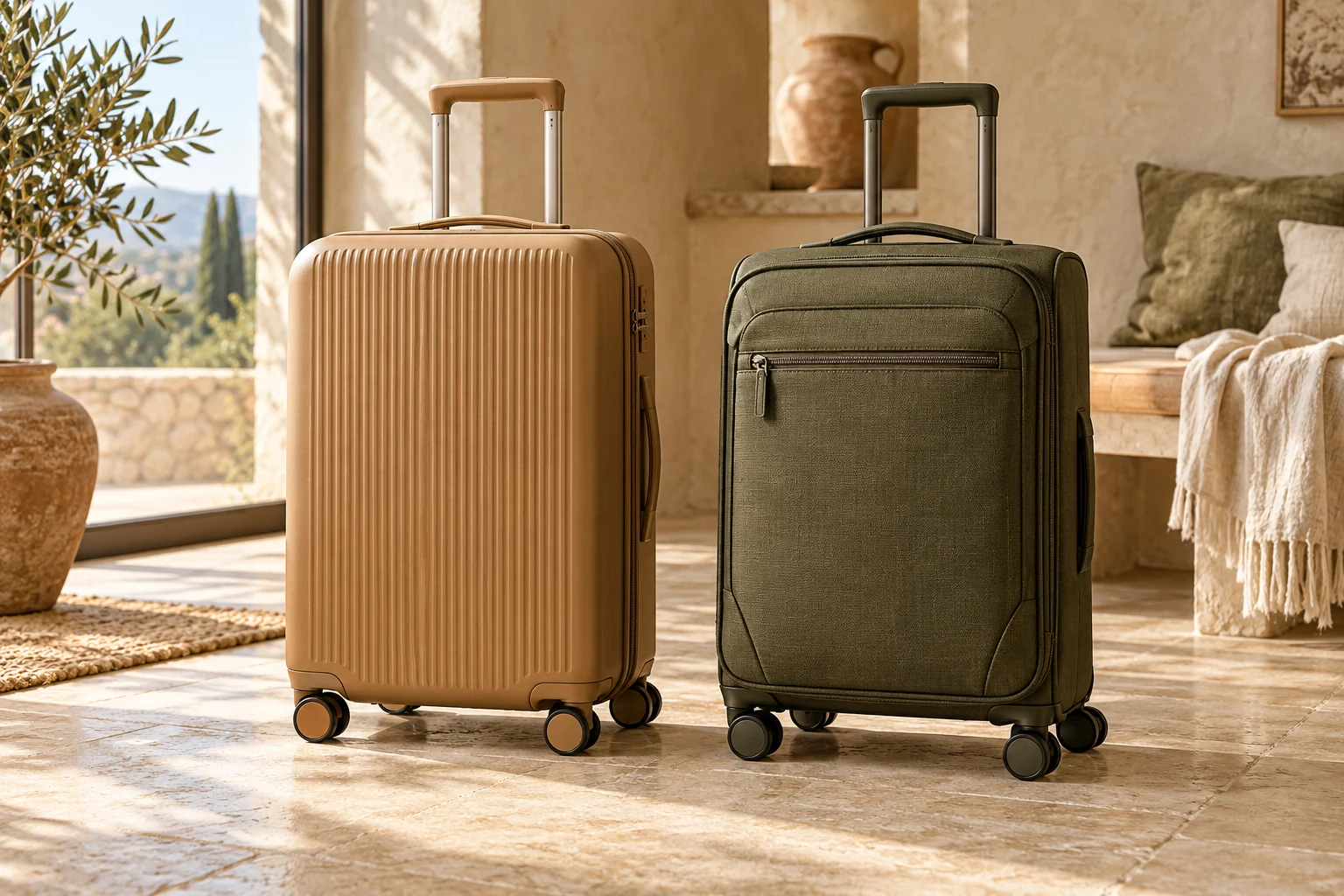
Compare the actual bag, not just the material label. The opening, packed weight, external size, wheel design and repair options can matter more to your trip than whether the shell is hard or soft.
Look beyond the shell
Hard-sided and soft-sided luggage each include many different materials and construction methods. Neither label establishes a universal winner for weight or durability. Compare the specific models you are considering, using manufacturer measurements and the parts you can inspect.
Start with your route. Think about stairs, storage, short connections and the space where you will unpack. Then give more importance to the features that address those conditions.
Compare the day-to-day details
| Detail | Hard-sided designs | Soft-sided designs |
|---|---|---|
| Outside access | Some models have front access; many require opening the case | External fabric pockets are a common feature |
| Opening | Often opens into two halves; check room needed | Many have a lid over one main compartment |
| Shape | A rigid shell limits changes to its outline | Pockets and fabric may bulge when overfilled |
| Repairs | Check replacement wheels, handles and warranty terms | Check the same, plus fabric and zipper coverage |
Test the opening before choosing
Imagine arriving late and needing one item from the middle of the bag. Can you reach it without moving everything else? Check whether the case opens flat, how the compartments are held in place and whether your packing cubes fit. For a small room, think about the floor or luggage-rack space needed to open it.
Evaluate the full construction
Inspect the handle’s movement, grip the grab handles and try the zippers around corners. Turn the wheels and look for information about replacement parts. Read the warranty’s coverage, exclusions and claim process. Keep in mind that a warranty period alone does not tell you which kinds of damage are covered or who pays for shipping a repair.
Make a simple decision
Give each candidate a yes or no against your actual needs: fits the booked allowance, manageable when packed, convenient opening, accessible daily items and understandable repair support. Try the closest matches in person if that is practical, or check the seller’s return conditions before ordering.
If your current bag passes those checks, there may be no reason to replace it. A better packing routine can sometimes address the frustration that started the search.
Your next step
Use the carry-on buying checklist to compare external size and packed handling. Treat retailer descriptions as product information, rather than independent testing.
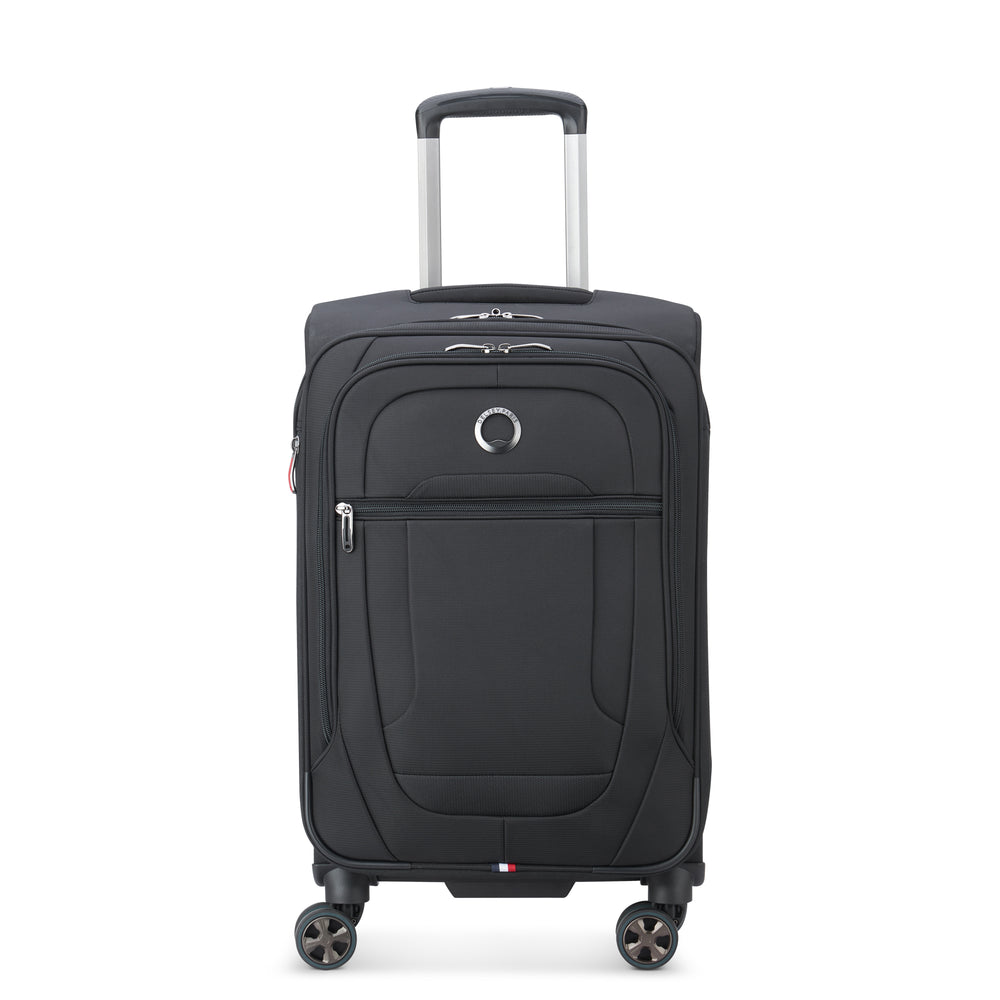
DELSEY Helium DLX
A softside option with exterior pockets, an expansion zipper and a removable, washable lining. Exterior: 23.5 × 14.25 × 10 inches before expansion. Despite its carry-on name, it exceeds many airlines’ cabin limits.
We may earn a commission if you buy through this link, at no extra cost to you.
Sources & approach
Researched guide · Checked September 21, 2026. This is practical editorial guidance, not a hands-on product test. Recheck operator rules for your particular booking before travel.
Your next useful read.
The carry-on that fits your kind of trip
Start with the journey, then choose the bag. A practical guide to size, weight and the features that matter.
3 min read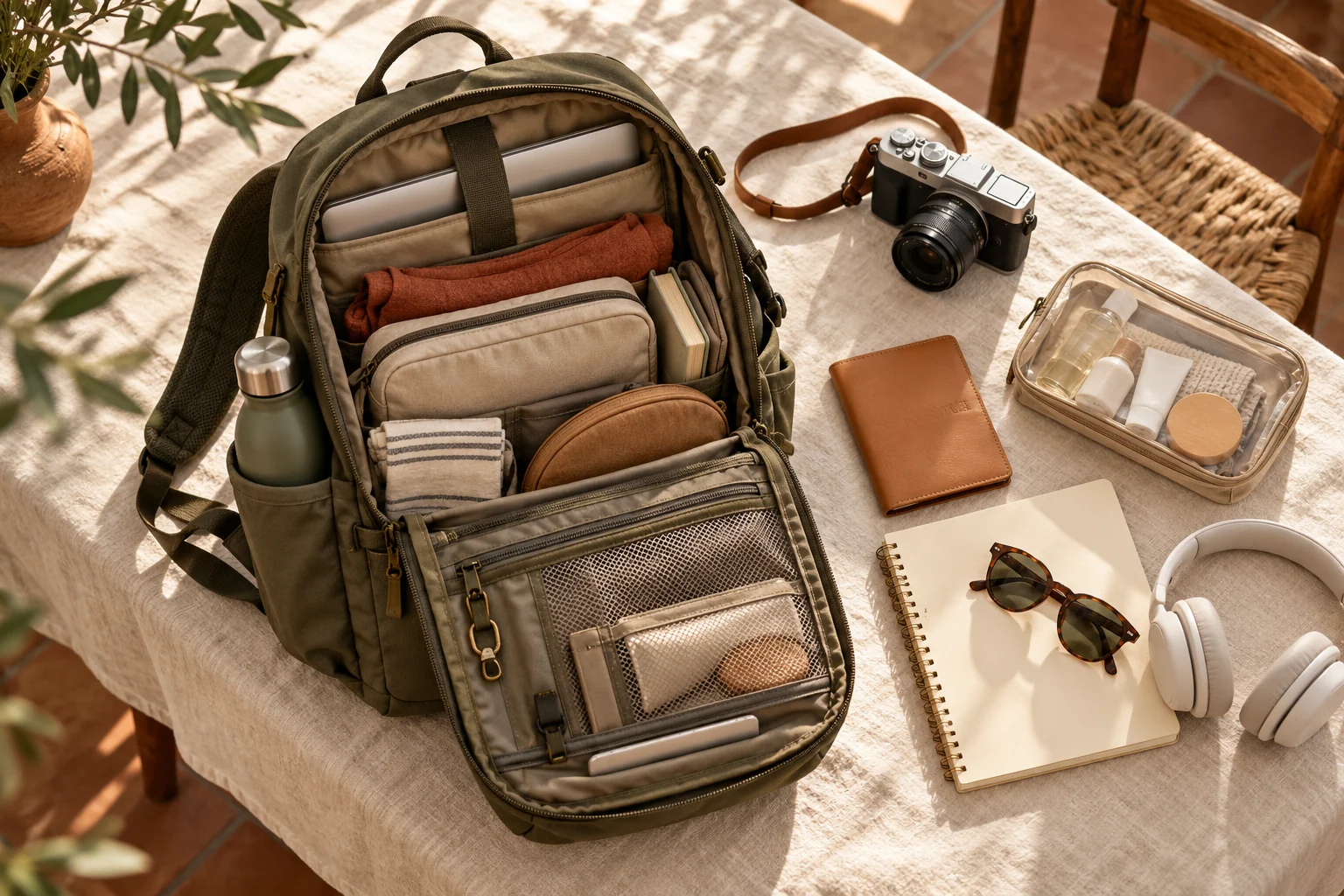
Make your personal-item bag work harder
Keep the things you need during the journey close, organized and easy to reach.
3 min read