Make your personal-item bag work harder
Keep the things you need during the journey close, organized and easy to reach.
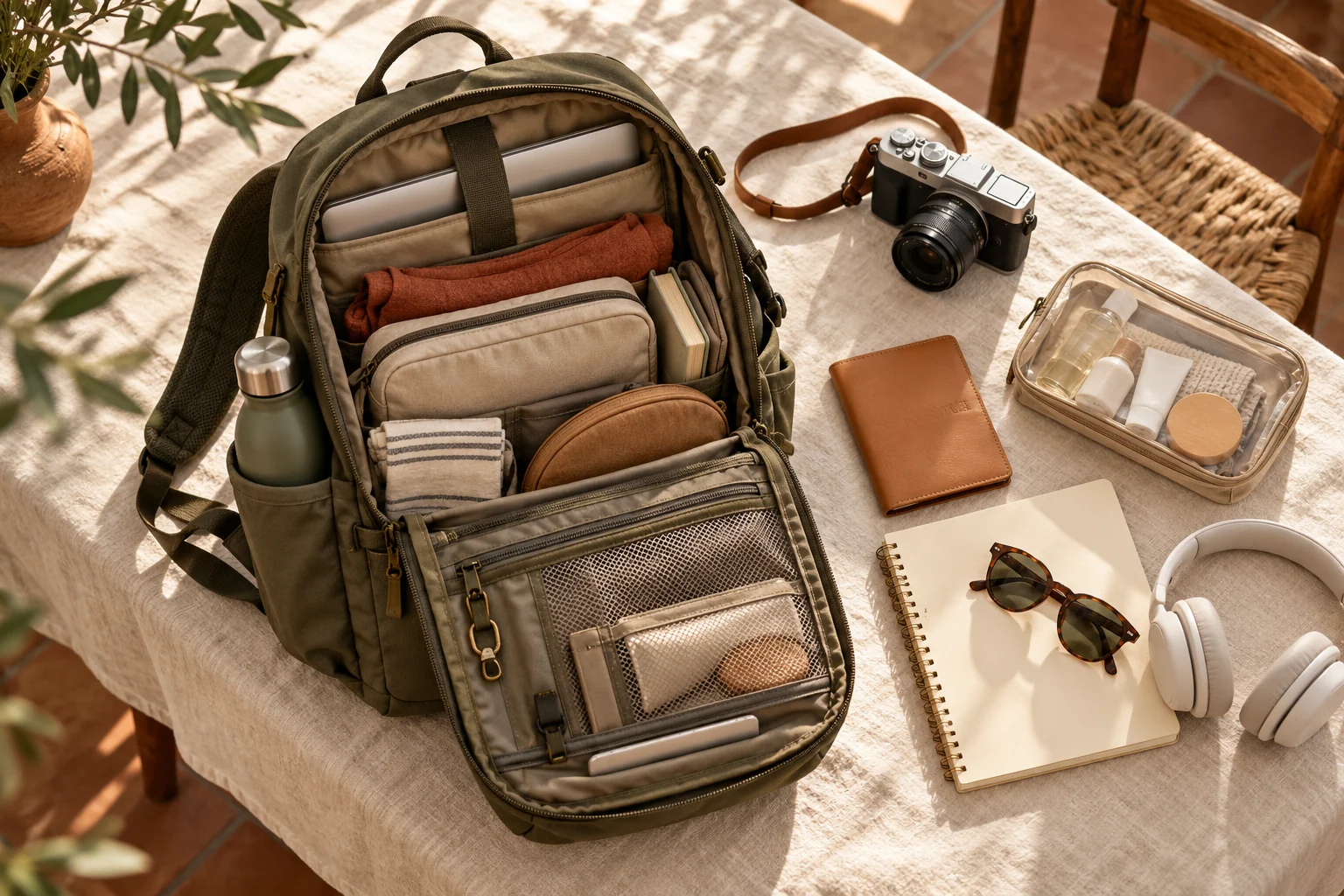
Build your personal-item bag around access: documents, essential personal items, charging cable and an arrival layer. Check the operating airline’s allowance and measure the bag after packing it.
Give the smaller bag a clear job
The main bag carries most of your trip. The smaller bag should help you manage the journey itself. Start with the items you want while the larger bag is out of reach. That could include a document wallet, headphones, glasses, a cable and a layer for a cold cabin. Keep the list short enough that you can still find things easily.
Verify what personal item means for your booking
Rules depend on the airline, ticket and aircraft. Delta, for example, describes a personal item as a small bag that fits underneath the seat in front of you. Do not assume that another airline or fare offers the same allowance. Check the operating carrier for each segment, including a flight sold by one airline but flown by another.
Measure the packed outline
A flexible backpack can change shape after a bottle, headphones case and jacket are added. Measure at its widest points with those items inside. Check any published airline dimensions and the space needed for your feet. A volume label does not confirm that an under-seat bag meets a particular size limit.
Look at the arrangement of pockets as well as their number. One clearly organized main area may work better than many narrow pockets you cannot distinguish by feel.
Create three easy zones
- Reach quickly: ticket, document wallet and items needed at a checkpoint.
- During the journey: headphones, glasses, cable and a compact layer.
- Just in case: a change of essentials and the personal items you would want if separated from the main bag.
Keep valuables secure and follow operator instructions on where bags must be stowed. Use a separate pouch for small loose items instead of leaving them at the bottom.
An optional comfort extra
If a travel pillow earns its place in your bag, compare the space it takes when packed. These manufacturer-listed options have not been hands-on tested by Nuporta.
Carex Inflatable Neck Rest Pillow
An inflatable option to consider when packing space matters.
Listed as sold out when checked October 11, 2026. Check Carex for current availability.

Carex Memory Foam Travel Pillow
A memory foam option; allow room for its packed shape in your personal-item bag.
Listed as sold out when checked October 11, 2026. Check Carex for current availability.
Affiliate links · Nuporta may earn a commission at no extra cost to you.
Prepare for a gate check
If your main carry-on has to be checked at the gate, you may need to move certain items into the cabin. The FAA requires spare lithium batteries and power banks to stay in carry-on baggage. Keep them accessible, protect them from damage and short circuit, and check your airline’s additional restrictions.
Our travel-tech guide covers a compact pouch and the official source to check before departure.
Use the bag before the trip
Walk around with it packed, try the straps and open it while it is resting on your lap. You are checking comfort and access, not performing a durability test. Remove things that do not earn their place. Then add the final list to your packing checklist.
Sources & approach
Researched guide · Checked September 21, 2026. This is practical editorial guidance, not a hands-on product test. Recheck operator rules for your particular booking before travel.
Your next useful read.
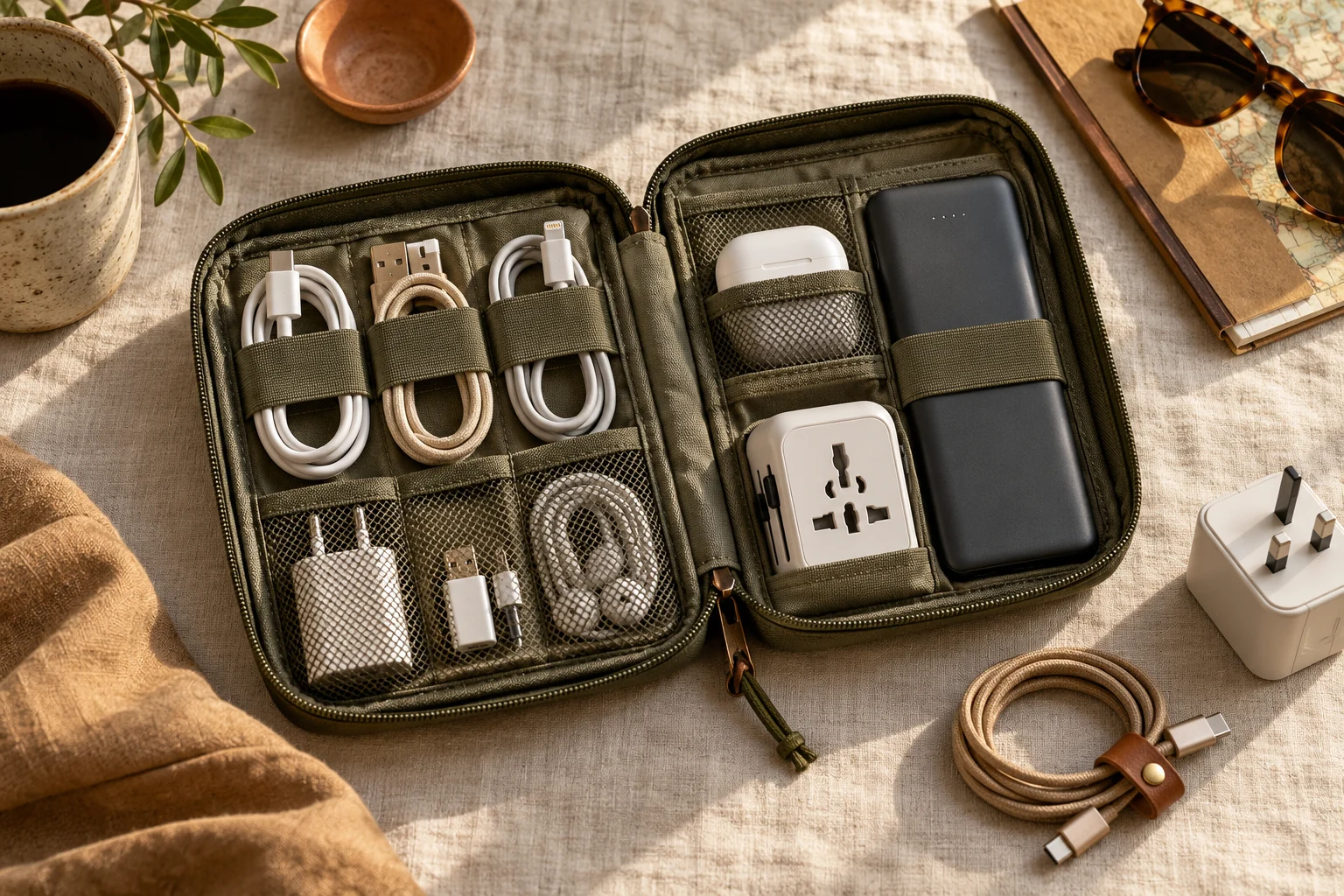
A calmer way to pack cables and chargers
Bring the connections you need, keep small items together and check battery rules before flying.
3 min read
The carry-on that fits your kind of trip
Start with the journey, then choose the bag. A practical guide to size, weight and the features that matter.
3 min read